As digital services continue to expand, businesses need reliable ways to confirm that customers are who they claim to be. Traditional identity verification methods can be vulnerable to document fraud, identity theft, and sophisticated impersonation attempts. Modern technologies such as NFC identity verification and certified liveness detection provide a stronger approach by combining secure document reading with advanced biometric checks.
Together, these technologies can help organizations build a more trusted digital onboarding and authentication process while reducing friction for legitimate users.
NFC identity verification uses Near Field Communication technology to read information stored inside compatible identity documents, such as NFC-enabled passports and electronic identity cards. Instead of relying only on photographs or manually entered information, an NFC-enabled verification solution can securely access digital information stored on the document chip.
During verification, the user's smartphone or compatible device communicates with the NFC chip. Depending on the document and verification solution, information such as identity details and digitally stored biometric data can be checked against the information presented during onboarding.
This process can provide businesses with an additional layer of confidence when verifying identity documents remotely.
A typical NFC identity verification workflow may involve several stages:
Because the process can reduce dependence on manually entered information, NFC verification can support faster and more automated digital onboarding.
While NFC verification can help validate information associated with an identity document, businesses also need to determine whether the person completing the verification is a real, present individual.
This is where certified liveness detection becomes important.
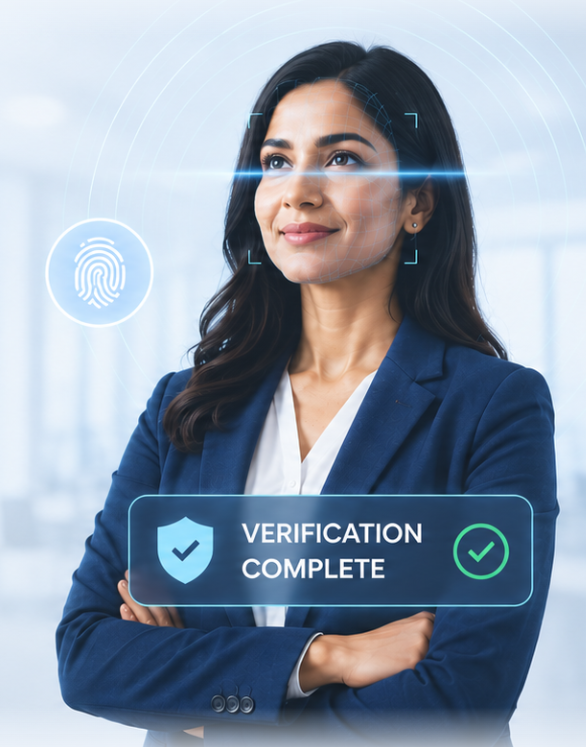
Liveness detection analyzes biometric or facial characteristics to help determine whether a live person is interacting with the verification system rather than a photograph, video recording, replayed media, mask, or other presentation attack.
The term "certified" can refer to a solution that has undergone testing or evaluation against recognized standards or certification requirements. Businesses should verify the specific certification, testing methodology, scope, and issuing organization rather than treating the word "certified" as a universal security guarantee.
Using NFC identity verification and liveness detection together can create a more comprehensive identity verification workflow.
NFC technology can help validate information associated with an electronic identity document, while liveness detection focuses on the person presenting the identity.
For example, during remote onboarding, a user may first provide an electronic identity document. The system can then read the document's NFC chip and validate available information. The user may subsequently complete a facial liveness check to demonstrate that they are physically present.
This combination can help address two different questions:
Connecting these checks can provide businesses with a stronger foundation for digital identity verification.
NFC identity verification can be useful across industries where secure remote identity confirmation is important. Potential applications include:
Organizations can integrate NFC verification into digital onboarding workflows to reduce manual document processing while maintaining a convenient user experience.
Certified liveness detection can provide several advantages when appropriately implemented:
Improved protection against presentation attacks: Liveness technology is designed to help distinguish a live person from various spoofing attempts.
Remote identity assurance: Users can complete biometric checks through compatible devices without visiting a physical verification center.
Faster onboarding: Automated biometric analysis can reduce reliance on lengthy manual verification procedures.
Better user experience: A well-designed verification flow can allow legitimate users to complete identity checks quickly.
Stronger security layers: Liveness detection can complement document verification, face matching, and other identity security technologies.
No single verification technology should necessarily be treated as a complete solution for every security requirement. Businesses can create a stronger verification framework by combining multiple controls.
A modern workflow may include document capture, NFC identity verification, document authenticity checks, face matching, certified liveness detection, risk assessment, and appropriate manual review.
This layered approach allows organizations to evaluate different aspects of an identity instead of relying on one signal.
NFC identity verification and certified liveness detection are important technologies for organizations developing secure digital identity workflows. NFC can help extract and validate information from compatible electronic identity documents, while liveness detection helps establish that a real person is participating in the verification process.
When implemented as part of a broader identity verification strategy, these technologies can support secure onboarding, reduce exposure to certain forms of identity fraud, and create a smoother digital experience. Businesses should also evaluate certification claims, privacy requirements, device compatibility, security standards, and integration capabilities before selecting a verification solution.

This post has been authored and published by one of our premium contributors, who are experts in their fields. They bring high-quality, well-researched content that adds significant value to our platform.


Your go-to source for news, lifestyle, culture, tech, and more. Fresh updates daily, stay informed always.
Email: contact@thedailylondon.com