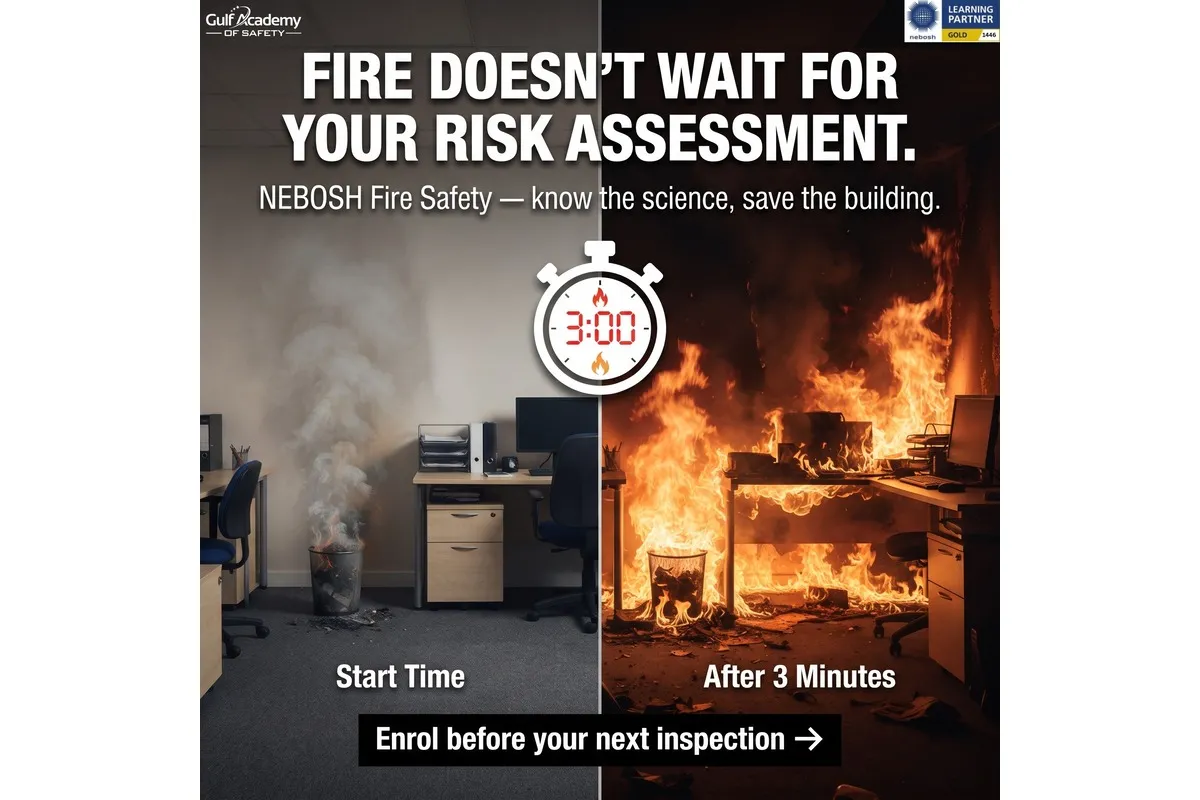
Imagine opening your study materials for the first time. The pages are crowded with terms like combustion, compartmentation, and means of escape, and you wonder where to start. Every successful learner has felt that moment. The good news is that a clear plan turns confusion into confidence.
This guide walks you through the main themes of the NEBOSH Certificate in Fire Safety and shares practical exam tips so you can study with direction instead of guesswork.
Fire safety is about preventing fires, protecting people,e and limiting damage when something goes wrong. It matters in offices, schools, refineries, malls, and hospitals alike. A formal qualification gives you a structured path through the subject and proves your knowledge to employers.
A quick note: unit titles and assessment formats can change between versions of any qualification. Always confirm the current details with your training provider before you plan your study.
The certificate suits supervisors, managers, wardens, and safety officers who hold some responsibility for fire safety. It is equally useful for newcomers beginning a career in the field and for professionals who want to formalise years of practical experience.
Everything starts with the science. You study how combustion works, the elements required for a fire, and how heat moves through conduction, convection, radiation, and direct burning. You also learn about the classes of fire and why different fuels need different extinguishing methods.
Study tip: Draw the fire triangle and a heat-transfer diagram from memory. Visual recall is powerful on exam day.
Next, you learn to recognise ignition sources, flammable materials and unsafe behaviours, then judge who could be harmed and how seriously. You also study how to choose and prioritise controls.
Study tip: Examiners often reward a logical process. Practise explaining your reasoning step by step: hazard, people at risk, existing controls, additional actions.
This theme covers detection and alarm systems, emergency lighting, extinguishers, fixed suppression systems and passive measures such as fire-resisting construction and fire doors. It also looks at housekeeping, storage, hot work control and electrical safety.
Study tip: Link each control to the specific risk it addresses. That connection shows genuine understanding rather than memorised lists.
You examine evacuation strategies, assembly points, roles and responsibilities, training and drills. You also consider people who may need extra help to escape.
Study tip: Scenario questions often ask you to evaluate an arrangement and suggest improvements. Practise reviewing plans critically and offering realistic recommendations.
Start with a timetable and stick to it. Short, regular sessions usually beat occasional marathons. Break the syllabus into topics, tick them off as you master them, and leave the final weeks for full practice questions.
Use a simple rhythm: learn a topic, summarise it in your own words, test yourself, and revisit it a few days later. Spaced repetition helps knowledge stay put.
Many learners lose marks not because they lack knowledge but because they answer a different question from the one asked. Remember:
Underline the command word in every question before you begin writing.
Use realistic workplace examples wherever you can, because they show you can apply theory. Manage your time across questions and always attempt every part. A partial answer can earn marks, but a blank cannot.
Keep your writing or typing clear and well organised. Short paragraphs, sensible headings and logical order make an examiner’s job easier, and that usually helps your score.
A provider that offers feedback, mock questions and tutor access can help you spot gaps early. Ask for marked practice answers and act on the comments. Small corrections made during study can add up to big improvements on the day.
You now have a map of the syllabus and a toolkit for the exam. All that remains is to begin. Start your NEBOSH Certificate in Fire Safety today and build knowledge that supports both your exam success and your career.

This post has been authored and published by one of our premium contributors, who are experts in their fields. They bring high-quality, well-researched content that adds significant value to our platform.


Your go-to source for news, lifestyle, culture, tech, and more. Fresh updates daily, stay informed always.
Email: contact@thedailylondon.com