The Early Years Foundation Stage is a framework for learning, development and care from birth to age five in England. British curriculum settings in the UAE use its approach to shape early education, while local requirements govern matters such as school entry. For parents, the key idea is that purposeful play, relationships and adult guidance work together.
It is not simply preparation for worksheets or a race to read before other children. Understanding the framework helps you recognise learning in conversation, movement, storytelling and the small decisions children make throughout the day.
Three prime areas provide the foundation: communication and language; physical development; and personal, social and emotional development. Four specific areas extend this learning: literacy, mathematics, understanding the world, and expressive arts and design.
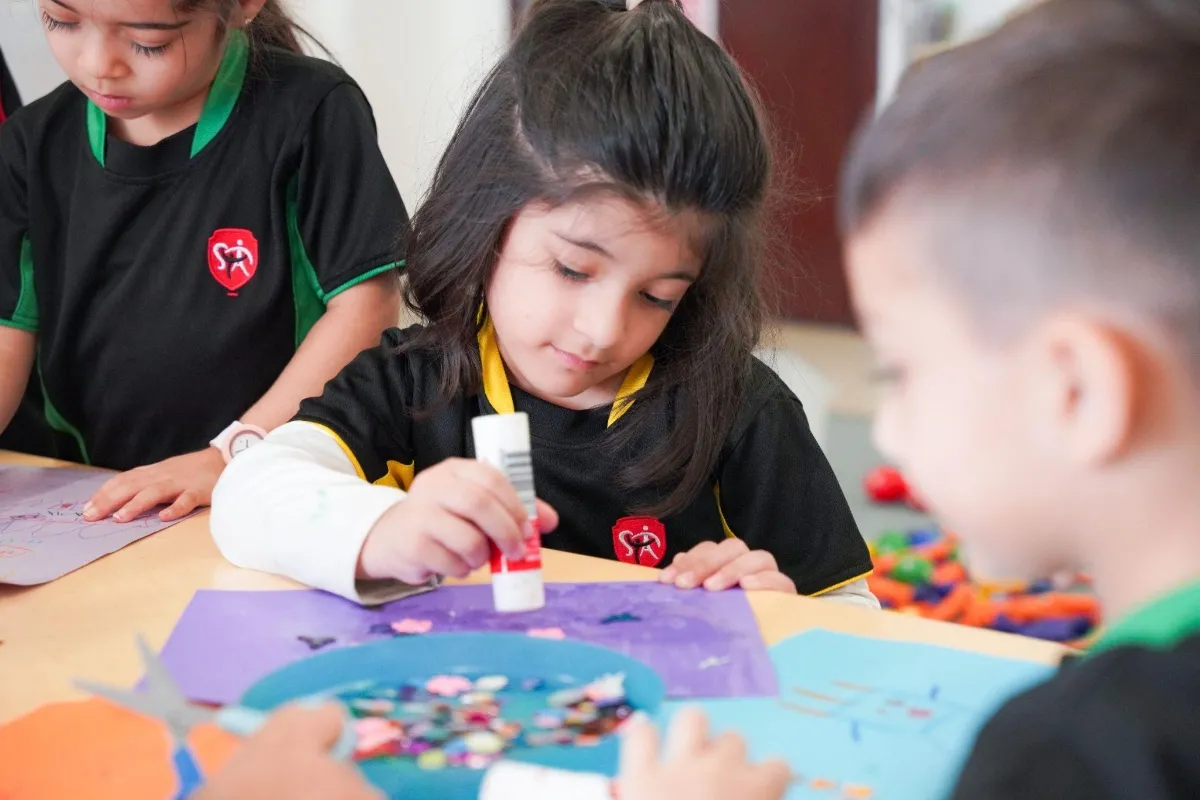
These areas often overlap within one experience. In an illustrative pretend shop, children might explain what they want, count objects, make price labels and negotiate taking turns. Handling materials develops coordination, while discussing where products come from can introduce ideas about the wider world.
The adult's role is to notice what is happening and extend it thoughtfully. A question, a new word or a different material may help a child take the next step without turning every moment into a formal lesson.
Progress in the Early Years Foundation Stage can include expressing an idea more clearly, persisting with a difficult construction or becoming more confident in a routine. Literacy and number knowledge matter, but they sit alongside communication, independence and relationships.
When visiting an FS1 school, ask staff to explain how they observe learning and use that information. SIA's early years page is one example of a programme to explore in Sharjah. Discuss how teachers identify a useful next step and communicate it to parents.
A helpful update goes beyond naming an activity. It explains what the child attempted, what they could do and what support came next. Parents can contribute observations from home, especially when a child behaves differently in familiar surroundings or uses another language.
The question “What is FS1 and FS2 in school” concerns both the programme and the correct entry point. These are Foundation Stage year groups within British schooling. In the UAE's published admission-age mapping, FS1 corresponds to Pre-KG, while FS2 corresponds to KG1.
For children not enrolled in a school, nursery or early childhood centre in 2025–2026, the Ministry of Education's new rules apply from 2026–2027. At schools starting in August or September, the cutoff is 31 December: age three for FS1/Pre-KG and four for FS2/KG1. Children enrolled during 2025–2026 are not automatically reclassified under the new cutoff. For a transfer application, ask admissions to confirm placement using the child's previous enrolment and school records, rather than date of birth alone.
When reading background information about school starting age in the UAE, check it against the current Ministry guide. Some school articles retain older cutoffs or different year-group mappings. Ask admissions to confirm the applicable class from the child's date of birth and educational history before completing an application.
Keep home activities simple and responsive to the child's interests. Share a story, talk about what happens next, count objects during a familiar routine or make something together. Allow time for the child to explain, choose and try again.
If a particular task is difficult, describe the observation to the teacher and discuss a shared approach. Avoid turning a developmental concern into a comparison with another child. Consistent communication between home and school makes the framework more useful than treating it as a checklist to finish early.

This post has been authored and published by one of our premium contributors, who are experts in their fields. They bring high-quality, well-researched content that adds significant value to our platform.


Your go-to source for news, lifestyle, culture, tech, and more. Fresh updates daily, stay informed always.
Email: contact@thedailylondon.com