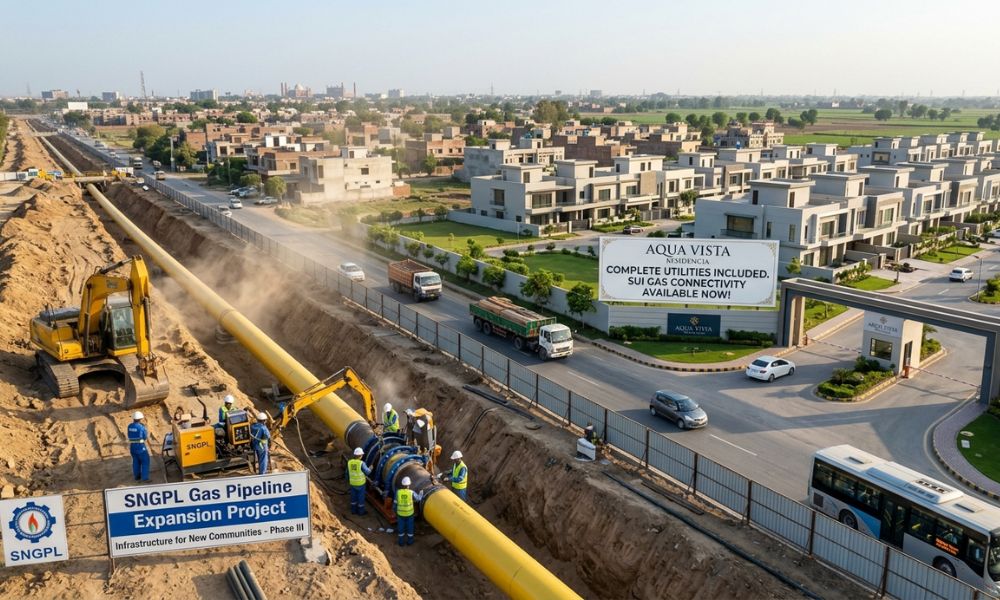
Pakistan is entering a new phase of urban growth where infrastructure development is becoming directly connected with property value, housing demand, and investment opportunities. In 2026, one of the most discussed utility related trends is the expansion of the sui gas pipeline network into newly developed residential and semi urban areas.
Sui Northern Gas Pipelines Limited infrastructure projects are increasingly influencing how people choose locations for homes, businesses, and long term investments. Consumers now view gas pipeline availability as an important factor before purchasing property.
Property buyers today are more informed than ever before. Modern consumers no longer focus only on plot size or location. They also evaluate utility accessibility before making investment decisions.
Areas with established gas pipeline access are often considered more attractive because residents prefer locations where basic utilities are already available.
This shift is changing the real estate market across many cities in Pakistan.
A major trend in 2026 is competition between housing societies based on infrastructure readiness.
Developers now actively promote utility connectivity as a selling point because buyers want complete residential facilities before moving into new communities.
Gas pipeline access is increasingly becoming part of marketing campaigns for modern housing projects.
New homeowners want convenience and faster settlement after purchasing property.
Families prefer residential areas where they can immediately access cooking, heating, and daily living facilities without facing long waiting periods for infrastructure development.
This demand is increasing the importance of utility connected housing projects throughout Pakistan.
Another important trend is the gradual movement of gas infrastructure toward developing semi urban locations.
As cities continue expanding outward, surrounding areas are becoming attractive for residential construction and investment. Utility expansion into these locations is encouraging population growth and increasing local property demand.
This development pattern is reshaping many regions around major cities.
Utility access is not only important for households. Small businesses, restaurants, workshops, and commercial facilities also prefer locations with established gas infrastructure.
Reliable utility availability helps businesses operate more efficiently and reduces operational uncertainty.
Because of this, pipeline expansion indirectly supports economic activity in growing communities.
Real estate investors now closely observe infrastructure announcements before purchasing land or commercial property.
Pipeline expansion plans often influence future property demand because buyers expect utility connected areas to attract more residents over time.
This growing awareness is making infrastructure development a major discussion topic in property investment circles.
Rapid urbanization continues increasing pressure on infrastructure systems across Pakistan.
Rawalpindi, Lahore, and Faisalabad are among the cities where expanding residential populations are creating stronger demand for utility infrastructure improvements.
This growth is influencing long term planning priorities for future development.
Consumers are becoming more aware of cleaner and more efficient energy usage solutions.
Many households view natural gas as a practical alternative compared to some traditional fuel methods. This perception is contributing to continued public interest in pipeline expansion discussions.
Energy accessibility is increasingly connected with broader conversations about quality of life and sustainable living.
Future infrastructure projects are expected to focus more on efficiency, digital monitoring, and improved distribution systems.
As urban populations continue growing, smarter infrastructure planning will likely become essential for supporting residential and commercial expansion across Pakistan.
Consumers will continue monitoring utility accessibility as an important factor in property and lifestyle decisions.
The growing focus on sui gas pipeline expansion reflects how deeply utility infrastructure now influences housing, investment, and urban development trends in Pakistan.
Consumers are no longer viewing gas access as a simple household service. It is becoming a major factor in property planning, business growth, and modern community development during 2026.

This post has been authored and published by one of our premium contributors, who are experts in their fields. They bring high-quality, well-researched content that adds significant value to our platform.


Your go-to source for news, lifestyle, culture, tech, and more. Fresh updates daily, stay informed always.
Email: contact@thedailylondon.com